
Window or Aisle
The great cabin debate is not about personality. It is about flight length, body clocks, hydration, and who controls the exit. A decision system, not an opinion.
Every frequent traveler carries a firm seat preference and a set of arguments for it, delivered with the confidence of a barrister. The aisle people cite freedom. The window people cite the view and the wall to lean on. Both camps are arguing about identity when they should be arguing about context — because the correct seat is not a personality trait. It changes with the flight.
What follows is the decision system I actually use: not "which seat are you," but "which flight is this."
What each seat is actually selling
Strip away the tribal loyalty and each position offers a specific bundle of goods.
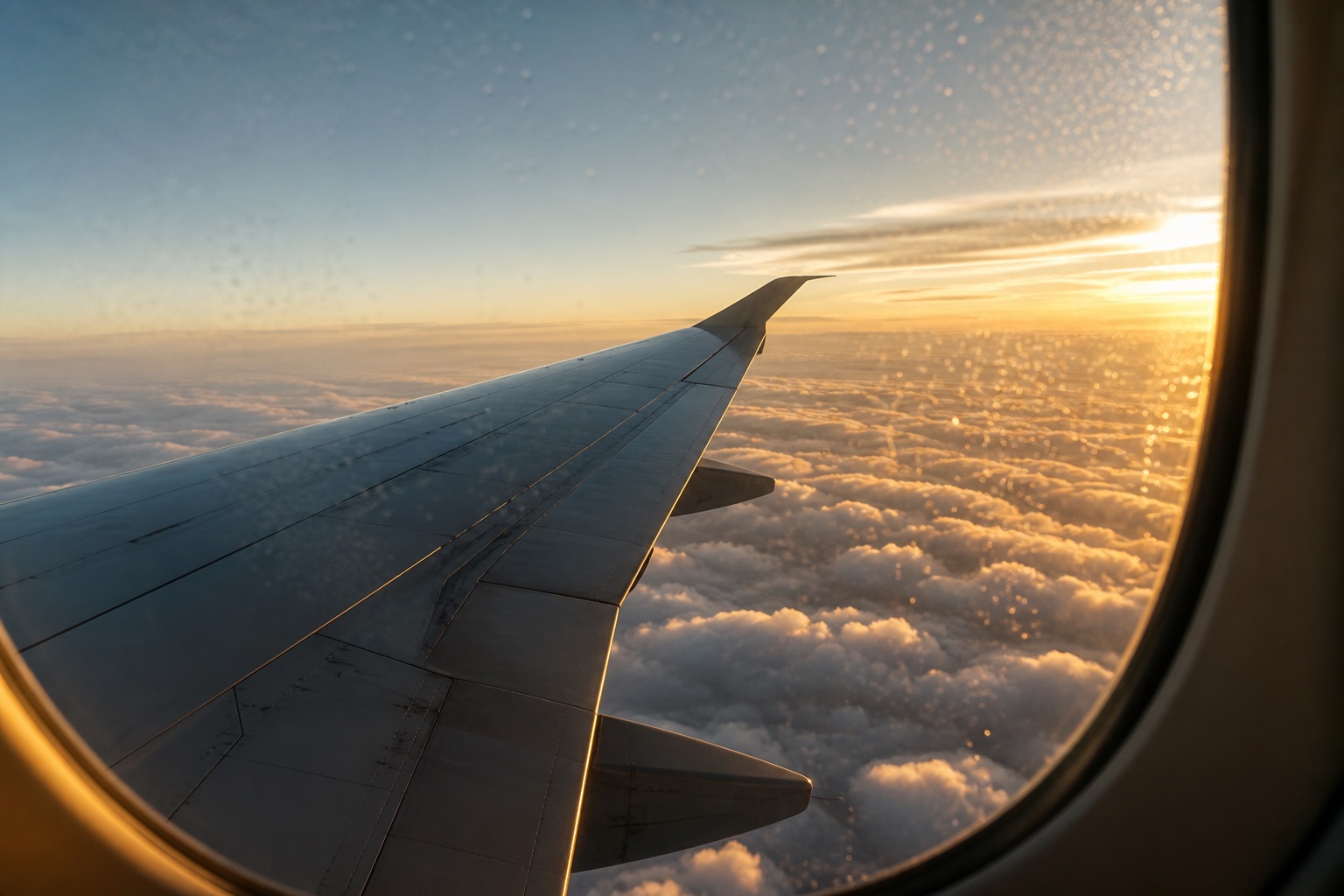
The window sells control of the wall and the light. You get a surface to lean against that no seatmate can contest, command of the shade, and the view — which on the right routing is genuinely spectacular and on the wrong one is six hours of undifferentiated cloud. Crucially, the window also sells the right to be left alone: nobody climbs over you, and you climb over no one only when you choose to.
The aisle sells freedom of movement and first-mover advantage. You stand when you like, walk when you like, and reach the overhead bin without negotiation. On landing, you are in the corridor before the window passengers have found their shoes. The costs are equally concrete: the beverage cart owns your elbow, every seatmate bathroom trip is your problem, and you will be woken by strangers.
The middle sells nothing and should be understood as the absence of a choice rather than a choice. When assigned one involuntarily, the convention worth knowing: the middle seat holds moral title to both armrests. This is not law, but it is justice.
The flight-length framework
Short haul: under three hours
Take the window. The aisle's core product — freedom of movement — barely matters on a flight where the seatbelt sign may occupy a third of the journey and most passengers never stand at all. Meanwhile the window's products are at full value: a wall for a nap, a view during the two most interesting phases of any flight (the first and last twenty minutes), and insulation from the boarding scrum.
The exception is the tight connection. If you land with forty minutes to make an onward flight, sit as far forward and as close to the aisle as the booking allows. Rows matter more than most people think: on a full flight, the gap between row 8 and row 28 at the door is easily ten minutes.
Medium haul: three to six hours
This is where the aisle earns its reputation. Past the three-hour mark, movement stops being a preference and becomes physiology. Circulation, stiffness, and simple restlessness all argue for the ability to stand without diplomacy, and health guidance for air travel consistently encourages periodic movement on longer segments — advice that is materially easier to follow from the aisle.
The override: if the flight is timed to your sleep window and you intend to use it, take the window and its wall. A sleeping passenger spends the aisle's advantages without collecting them.
Long haul and overnight: the honest self-assessment
Overnight flights split travelers into two types, and the seat should follow the type, not the aspiration.
If you reliably sleep on planes, the window is close to non-negotiable. The wall, the shade control, and the immunity from being climbed over are the three pillars of airborne sleep. A window sleeper can put together several genuine hours; an aisle sleeper is a public utility, woken at intervals by seatmates, carts, and shoulder-brushing strangers.
If you do not sleep on planes — and many people never will, no matter the seat — stop paying for sleep infrastructure you cannot use. Take the aisle, hydrate properly, walk hourly, and treat the flight as a long quiet reading night with a view of nothing.
The self-assessment has to be honest. The most common seat mistake I see is aspirational: a known non-sleeper books a window "to try to sleep," achieves ninety uncomfortable minutes, and spends the other eight hours trapped behind two sleeping strangers, rationing water to avoid the climb.
Position within the cabin: the second decision
The row matters as much as the letter.
- Forward rows deplane faster, board later in most sequences, and sit ahead of the engines' noise plane — measurably quieter on most narrow-bodies.
- Over-wing rows offer the smoothest ride in turbulence; the aircraft pitches around a point near its center. Nervous flyers should sit here and skip the rear entirely, which moves the most in rough air.
- Exit rows trade legroom for responsibilities and often for fixed armrests and no under-seat storage during takeoff. Worth it for tall travelers; check the specific row, because on many aircraft one exit row does not recline.
- Galley- and lavatory-adjacent rows are the fine print of seat maps: light, noise, and foot traffic for the whole flight. A seat map that shows a suspicious gap in an otherwise full cabin is usually telling you something.
And one detail that catches even experienced bookers: not every window seat has a window. Aircraft plumbing and structure occasionally claim a wall panel, leaving a "window" seat facing blank plastic. Independent seat-map sites catalog these rows per aircraft type; thirty seconds of checking prevents a very specific disappointment.
The pre-booking checklist
Compressed to its operational core, the system runs in four questions:
- How long is the flight? Under three hours, default window; three to six, default aisle; overnight, decide by sleep type.
- Will I sleep? Answer from history, not hope.
- What is the connection situation? Tight onward transfer overrides everything: forward and aisle.
- What does the seat map say? Two minutes checking exit rows, missing windows, and galley proximity — after choosing the letter, choose the row.
The debate endures because both sides are right about their own flights. The window passenger drifting off against the wall over a sunset cloud deck is making the correct choice. So is the aisle passenger on the same flight, standing freely for a stretch at hour five. Seat selection is small — a few square feet, a few hours — but it is one of the few parts of air travel fully in the passenger's control. Spend the control deliberately.
Source notes
Facts in this story were checked against the following public resources at the time of writing:
- Federal Aviation Administration, "Fly Healthy" traveler guidance
- Centers for Disease Control and Prevention, Yellow Book: Air Travel
- Aerospace Medical Association, passenger health publications
- SeatGuru cabin maps and seat reviews

Samantha “Sam” Hollis
Sam is the writer and publisher of this journal. She covers the practical craft of travel — the departures, connections, and systems — from her desk in Madison, Wisconsin. More on the about page; corrections welcome via the contact page.